|
LUMBER TERMS |
|
| GET THE QUALITY OF LUMBER YOU EXPECT |
Woodworkers familiar with grades and species may make informed decisions
saving both time and money. |
Just as people, and even brothers in the same family, have their physical differences -- trees do also. Products harvested from them have like characteristics but also have their own unique signatures. Trees grow conically. Each year a new cone of material forms over the last year's growth, producing a new growth ring. The limbs of a seedling, or young tree, do not grow up the tree but either become larger or fall off and eventually become completely covered by the new growth of the tree. Because of this, when milling a log, the highest quality comes from the outside of the log with the lowest quality coming from the inner most portion.
How do we qualify or value these fluctuating volumes and qualities? NHLA lumber grades are based upon the percentage of clear face cuttings present in each board along with the varying qualities and sizes within each grade. The NHLA recognizes several grades -- the highest quality is called FAS (Firsts and Seconds), then FAS One Face, Selects, #1 Common, #2 Common, #3a Common, and #3b Common. While these are the standard grades, there are more specialized grades to define items such as worm holes in Soft Maple (WHAD, Worm Holes Are a Defect and WHND, Worm Holes Not a Defect).
WE ARE NHLA GRADE CERTIFIED FOR QUALITY ASSURANCE
There are about 7% of NHLA members nationwide who are grade certified. L.L. Johnson Lumber Mfg. Co., and Johnson’s Workbench are one of three members grade certified in Michigan. The National Hardwood Lumber Association’s Certification Program is a voluntary quality assurance program. A National Inspector will perform random grade sampling at a member’s location. If the company’s random sample is within 4% of the value determined by the National Inspector the company is granted certification. This certification is kept current by follow up checks at least twice a year to maintain tight compliance with the National Hardwood Lumber Association grading rules. This certification provides the company with a independent quality control check.
WIDTH, COLOR, AND GRAIN PATTERN HELP DETERMINE LUMBER VALUE
In pulling lumber for a large volume order, sometimes an inspector encounters a board falling on the border line between five board feet and six. They will round up on the first borderline board and down on the next. When evaluating the board’s quality, they utilize the same rounding technique.
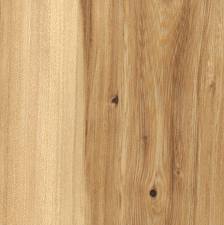
When selling, or buying, only one board, the variance of grade and volume must be narrowed, especially when high unit values are encountered. Rounding to the nearest board foot on $15.00 per board foot lumber creates problems. Wide clear boards in a package of hardwood lumber brings a higher unit price than the narrow lower quality pieces but together average to a unit price somewhere in between. Color and grain pattern must also be taken into consideration with some species such as Cherry and Quarter-sawn Oak. All heart, all red, Cherry commands a higher price than sappy. Quarter Sawn Oak, or highly figured, dictates a higher price than Rift Sawn, or lightly figured.
WE WILL SORT LUMBER TO YOUR SPECIFIC REQUIREMENTS
Not all lumber yards will sort to a customer’s specific requirements. Those that do, such as LLJ, will do so for a nominal charge. Because each log yields high and low grade products, evaluation and sorting must take place to supply customers with specific products suitable for their projects.
Custom evaluation and sorting carry a price so each woodworker needs to find their place in the process. Woodworkers familiar with grades and species may make informed decisions saving both time and money. In addition, as woodworkers expand their product offerings, they may use the lower value pieces in a lumber package for cabinet styles, drawer faces, and panel glue ups. Buying larger packages of lumber, rather than sorted specific items, requires less labor and expense and typically saves the purchaser money. On the other hand, if a woodworker does not have the storage space nor product line diversity to handle packages of unsorted lumber, they are better off paying for sorting. |
|
|
CUSTOMER REVIEW
"...the material I received from you was almost flawless. I have not seen such quality lumber anywhere."
-- R.J. Conley. READ MORE CUSTOMER REVIEWS...
WHAT DO YOU GET FOR THE PRICE?
Prices listed are for rough lumber, sold random width, and random length. The lumber is manufactured to produce the best possible appearance while conserving the maximum usable product of the log. For orders requiring specific widths, lengths, and color, please contact us for a FREE estimate.
DETERMINING YOUR
PRICE LEVEL
The footage of different species on the same order may be accumulated to determine price level. Ask us about special pricing on bunk (1000+ BF) quantities of any one species. Prices and availability subject to change without notice.
MEASURING KILN DRIED LUMBER
Kiln dried lumber from printed prices is measured after kiln drying and sold on net tally. No additions are made to cover the shrinkage which takes place in kiln drying. All thicknesses less than 1" are measured in surface feet.
special sizes
Printed lumber prices are for random width and random length lumber unless stated otherwise. We are happy to supply special widths and/or lengths for an additional nominal fee. Please contact us for availability and prices on special sizes.
OUR GUARANTEE
Your lumber purchases are fully guaranteed to be properly graded, measured and machined. LLJ does not guarantee products against loss or damage in transit due to circumstances beyond our control. To receive full credit for a returned package, the package must be in the same condition in which it was received.
NOTICE ON LUMBER PRICES
It is our goal to communicate accurate, timely information to our customers.
Prices and availability of products presented on our website and in our publications are subject to change without notice. For the most current product, pricing, and service information, please keep checking our website, or call us at 800-292-5937. |